Accepting new patients - contact us to book now!
Orthodontics Treatment
Transforming Smiles at High Street Dental Dental Practice
Orthodontics is a specialized branch of dentistry that focuses on correcting misaligned teeth. Individuals with issues such as overbites, underbites, overcrowded teeth, crooked teeth, or misaligned jaws may face challenges with eating or speaking. In such cases, orthodontic therapy is recommended to gradually realign the teeth for improved straightness and alignment. Additionally, orthodontics can enhance a person's smile for aesthetic purposes.
People may be born with a malocclusion, commonly referred to as a bad bite, or they might develop one due to trauma or harmful habits like thumb-sucking during childhood. It is crucial to address any malocclusion promptly, as it can lead to long-term dental health issues.
Orthodontics plays a vital role in dental health because crooked teeth or bad posture can heighten the risk of tooth decay and gingivitis. An improper bite can make it difficult or painful to floss between teeth, potentially leading to poor dental hygiene and negative impacts on oral health.
This powerful treatment can address:
- Tooth asymmetry
- Proper positioning of the jaw and teeth
- Overall symmetry of teeth
- Improved oral health, including eating and speech
- Correction of inappropriate bites
Types of Orthodontics:
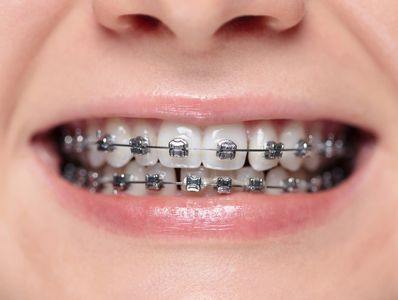
- **Metal Braces**: Typically used by children and adolescents, metal braces involve securing brackets to the teeth connected by a wire. The orthodontist adjusts the wire during appointments, usually scheduled every 4 to 8 weeks, to realign the teeth.
- **Ceramic Braces**: These clear, tooth-colored devices serve a similar function to metal braces but are less conspicuous and more discreet. Ceramic braces are often preferred by patients who seek a more subtle and affordable way to straighten their teeth while not opting for Invisalign or lingual braces.
- **Invisalign and Clear Aligners**: Ideal for patients with mild to moderate dental issues like misaligned teeth or a wide overbite, Invisalign offers a clear aligner solution. Additionally, those who previously wore braces and need a minor adjustment may consider clear aligners. However, for complex issues requiring long-term care, traditional braces may be more effective than any clear aligner system, including Invisalign.
Dentists may use dental X-rays, a plaster cast of the patient's teeth, and a review of their dental history to determine the need for orthodontic treatment. If orthodontic care is deemed necessary, your dentist will refer you to an orthodontist who can develop a personalized treatment plan. Our network includes dentists and orthodontists who can assist with all your treatment needs.
Orthodontic treatment often involves using devices that gently straighten teeth, such as braces, aligners, retainers, headgear, and Invisalign®. Proper maintenance and care of these appliances are essential to achieve the desired results. Your orthodontist will provide detailed instructions to ensure you get the best outcomes from your treatment.